Your gecko’s home does not need to be complicated.
A great crested gecko setup is about security, climbing space, easy food access, and a healthy humidity rhythm. Once you understand those pieces, the whole thing feels much less intimidating.
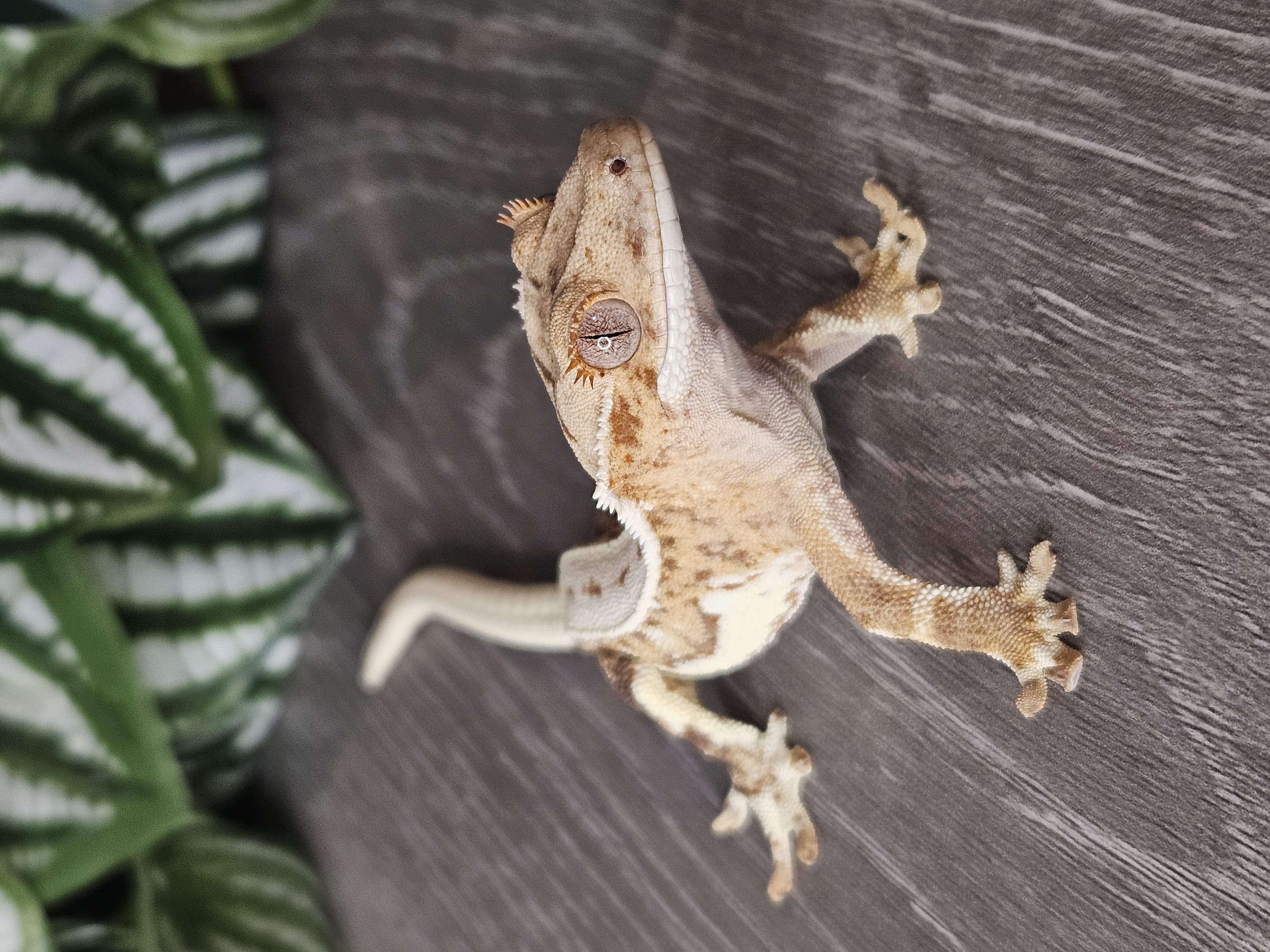
What actually matters in a good setup.
Before you worry about making the enclosure look perfect, focus on what helps your gecko feel safe, eat reliably, and settle in.
Cover
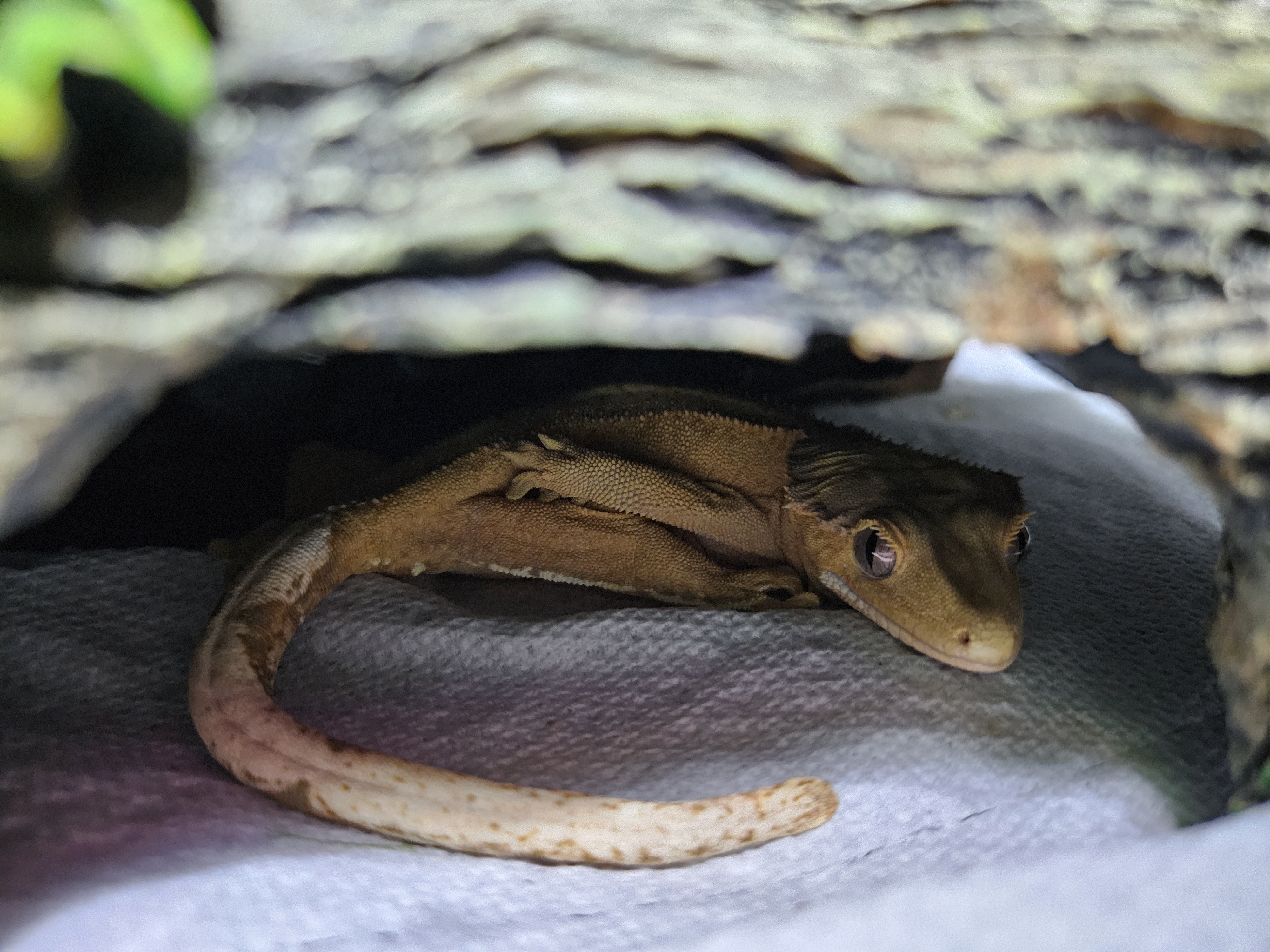
This is the biggest one. Your gecko should be able to hide, rest, and move around without feeling exposed.
Climbing space
Crested geckos are arboreal, so height, branches, vines, cork, and diagonal paths matter more than open floor space.
Easy food access
Food should be easy to find, near cover, and not placed where it gets soaked every time you mist.
Setup does not need to be perfect.
It needs to be safe, covered, clean, and consistent. You can always upgrade later once you and your gecko are settled.
Tank size should match the gecko.
Bigger is not automatically better. A small gecko in a huge, empty enclosure may feel exposed, dry out faster, and have a harder time finding food.
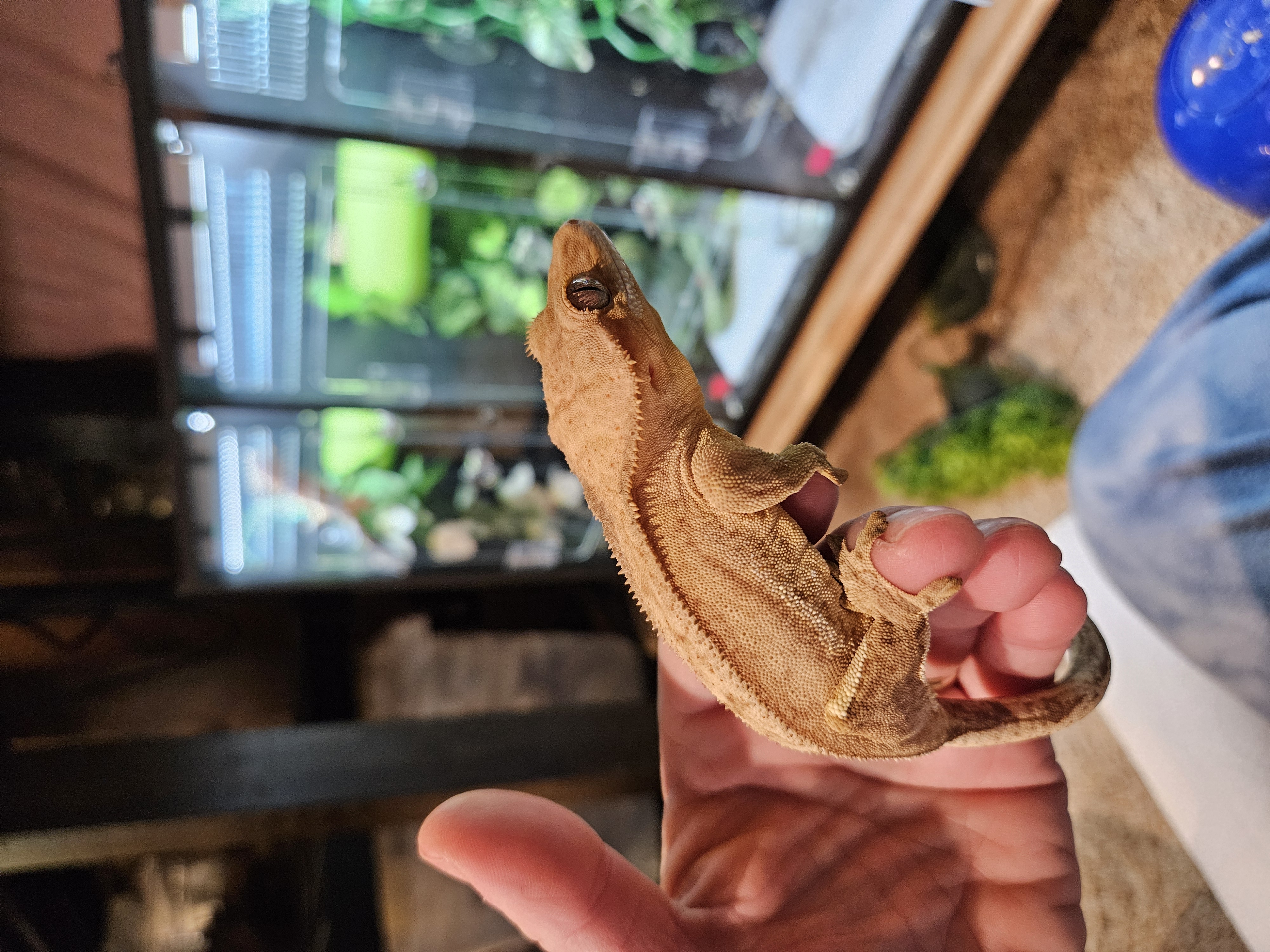
What goes inside the enclosure?
This is the practical checklist. You do not need a complicated build to create a good home.
Foliage and cover
Fake plants work great. Aim for enough cover that your gecko can disappear when they want to.
Branches, vines, cork
Give them paths up, across, and diagonally. They should not have to cross wide open space to feel secure.
Food and water access
Use a ledge or dish that is easy to find. Keep water shallow and clean.
Paper towels
For beginners, paper towels are clean, simple, and easy for monitoring poop, food, and shed issues.
Misting bottle
A basic spray bottle is enough for most keepers. The goal is a humidity spike and dry-out cycle.
Thermometer/hygrometer
This takes the guesswork out of temperature and humidity instead of making you rely on vibes.
Simple rule: if you can easily see your gecko from outside the tank, they probably need more cover.
The mistakes that make setups feel harder.
Most new keeper problems come from the same few setup issues. Fix the simple stuff first.
Too open
Exposed geckos often hide more, eat less, and stress more. Add cover before assuming something is wrong.
Too big too soon
A young gecko can get overwhelmed in a large enclosure, especially if food is hard to find.
Food is hard to find
If the dish is buried, too far away, or too exposed, your gecko may not approach it confidently.
Wet all day
Humidity should rise after misting and then dry down. Constant wetness can create problems.
Not enough climbing paths
Height is only useful when the gecko has safe ways to use it.
Overcomplicating
Fancy does not automatically mean better. A clean, covered, consistent setup wins.
Optional upgrades are not requirements.
Reassurance readers usually need to hear this clearly: you do not have to build a museum-quality terrarium before you can be a good keeper.
Bioactive
Beautiful and rewarding, but not necessary. Paper towels are perfectly fine for beginners.
Live plants
Great if you enjoy plants. Fake plants still provide excellent cover and security.
Low-level UVB
Some keepers use it as a benefit. Many crested geckos do well without it when basic care is solid.
Auto misting
Convenient, but not required. A spray bottle works for most homes.
Start simple. Upgrade when you are comfortable.
The goal is not to impress the internet. The goal is to help your gecko feel secure, hydrated, and able to eat.
When should you change the setup?
Your gecko usually shows you when something needs adjusting. Do not change everything at once unless there is a clear safety issue.
Quick tank questions for the detail-checkers.
These are the questions people usually keep clicking around to answer before they feel ready.
Do I need substrate?
Not right away. Paper towels work perfectly for beginners. They are clean, easy to replace, and make it easier to monitor poop, food, and health.
Do I need UVB lighting?
Not as a starting requirement. Some keepers add low-level UVB as an optional benefit, but many crested geckos do well without it when temperature, diet, cover, and humidity are right.
How much foliage is enough?
More than most new keepers think. If you can easily see your gecko from outside the enclosure, they probably need more cover.
Where should the food go?
Mid-to-upper level near foliage is usually best. The food should feel safe to approach and should not sit directly in the wettest misting zone.
Why is my gecko not finding food?
The enclosure may be too large, too open, or the food may be far from your gecko’s normal path. Try moving the dish closer to where they sleep or simplifying the setup.
Can I use fake plants?
Yes. Fake plants are practical and beginner-friendly. Avoid fabric or felt plants that stay damp; plastic or silicone-style foliage is usually easier to clean.
Is bioactive necessary?
No. Bioactive setups can be beautiful, but they are optional. Start simple and upgrade later if you actually want that kind of setup.
Want to keep learning?
These pages answer the next questions reassurance readers usually have.
Not sure about your setup? Send a photo.
You do not have to guess alone. If you want a second set of eyes on your enclosure, send a photo and Brianna can help you figure out what to adjust.
A good gecko home is not about making everything perfect. It is about giving your gecko cover, climbing space, food access, clean water, and a routine you can actually keep up with.