Frequently Asked
Questions

Simple, honest answers to the questions we get asked most. No jargon, no overwhelm — just what you actually need to know.

🦎 Getting Started

Thinking about getting a crested gecko? These are the questions everyone asks first.

Are crested geckos hard to take care of?
No — they're one of the easiest exotic pets you can own. They live at room temperature (no heat lamps), don't need special lighting, and their food is just powder mixed with water. If you can keep a houseplant alive, you can handle a crested gecko. Full care guide →
Is a crested gecko a good pet for kids or families?
One of the best. They're gentle, quiet, don't smell, and love routine. Kids love watching them climb and finding them in new sleeping spots each morning. Way less work than a dog or cat, and a great intro to pet responsibility.
How much does a crested gecko cost?
Pricing varies by morph, age, and genetics — but every YetiGex gecko includes a complete setup in the price (enclosure, food, dishes, plant, care sheet, and free overnight shipping). No hidden costs, no extra shopping trips. Browse available geckos →
What do I need to get started?
If you're buying from YetiGex — almost nothing. We include an enclosure, food, dishes, a plant, and a care sheet. The only things you might want to add are a misting bottle (a few dollars) and a digital thermometer/hygrometer. That's it. Setup guide →
Can I pick a specific gecko?
Yes! Browse our available geckos and message us about the one you like. We can tell you about their personality, eating habits, and whether they're a good match for what you're looking for.
How long do crested geckos live?
With good care, 15–25 years. They're a real companion pet — not a short-term commitment. The good news is that "good care" with cresties is genuinely simple.
Do you offer payment plans?
Reach out and ask! We're always happy to work with families who are ready to give a gecko a great home. Message us →
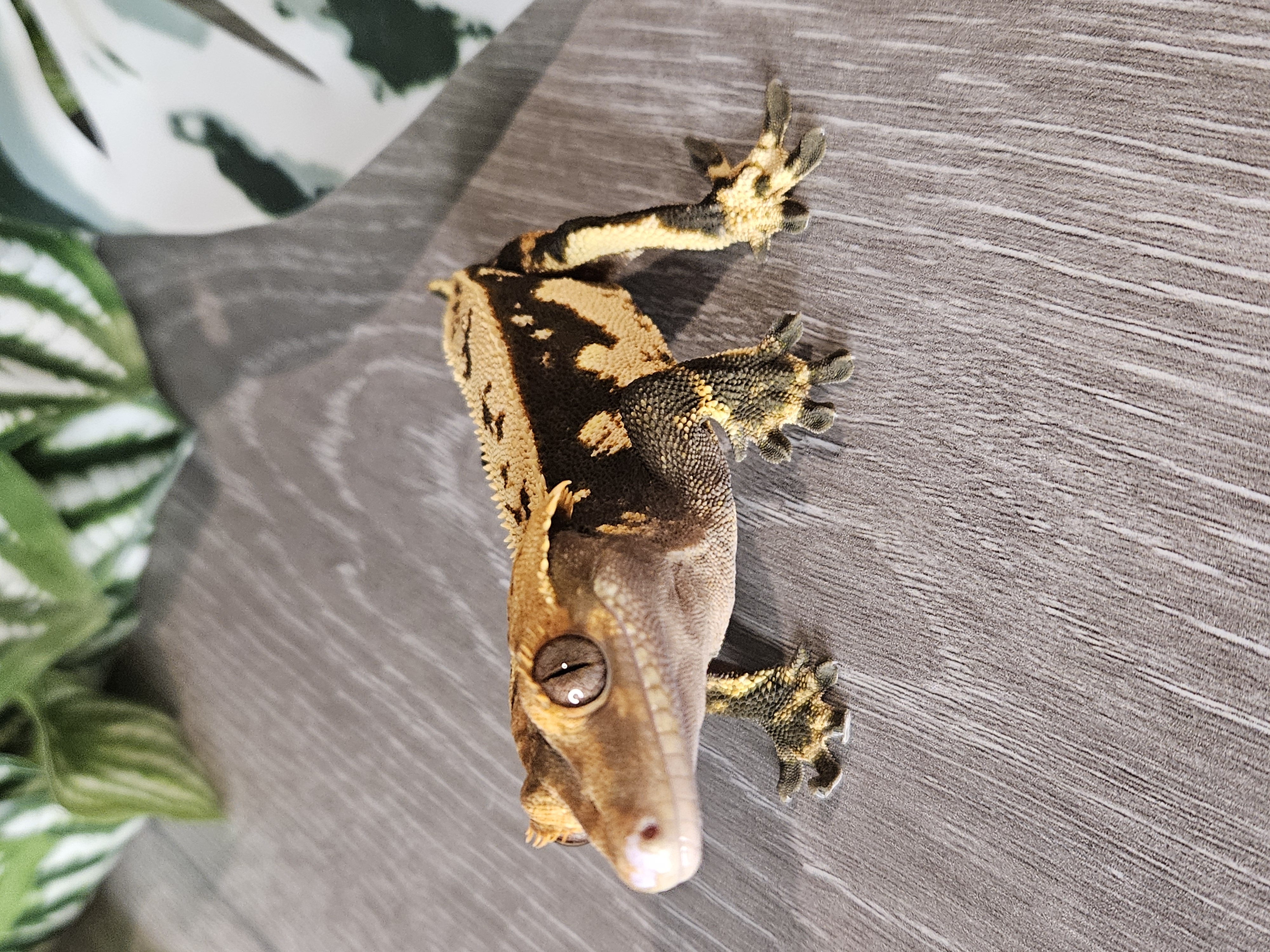
Crested gecko from YetiGex

🍽️ Care & Feeding

The day-to-day stuff. Spoiler: it's easier than you think.

What do crested geckos eat?
Their main diet is crested gecko diet (CGD) — a powder you mix with water. That's their complete nutrition. Some keepers offer occasional insects as treats, but it's totally optional. No live feeding required. Full diet guide →
How often do I feed them?
Babies and juveniles: offer fresh food 4–5 times per week. Adults: 3–5 times per week. Replace uneaten food every 24–48 hours. That's it — no complicated feeding schedules.
What temperature do they need?
Room temperature. Seriously — 68–78°F (20–26°C) is perfect. If your home is comfortable for you, it's comfortable for them. No heat lamps, no basking spots, no temperature gradients to manage. More on temps →
What about humidity?
Mist the enclosure in the evening, let it dry down during the day, mist again the next evening. That's the whole routine. You're not chasing a perfect number — you're creating a simple wet/dry cycle. Humidity guide →
Do they need special lighting?
Nope. Ambient room light gives them a natural day/night cycle. Some keepers add optional low-level UVB as an upgrade later, but it's not required. One less thing to buy and manage.
How do I set up their enclosure?
Vertical enclosure + substrate + climbing branches + foliage + food dish + water dish. Focus on giving them places to climb and hide. If they feel secure, everything else falls into place. Full setup guide →
How do I clean the enclosure?
Daily (1–2 min): Remove old food, check water, quick visual check. Weekly (10–20 min): Wipe glass, replace paper towels, rinse dishes. Monthly: Deep clean decor as needed. Less than 30 minutes a week total.
Can I handle my crested gecko?
Yes! They're generally gentle and tolerate handling well. Start with short sessions and let them walk hand-to-hand. Avoid sudden movements and give new geckos a few days to settle in before handling. Most become quite comfortable with regular, gentle interaction.
How do I know if my gecko is healthy?
Bright eyes, smooth skin, good appetite, active at night, regular poops. If they're eating, pooping, and moving around after dark — they're doing great. If you notice lethargy, weight loss, or difficulty shedding, reach out to us or consult a reptile vet.

Still have a question? We keep our answers simple because gecko care IS simple.

Free help — your gecko doesn't have to be from YetiGex.

Happy crested gecko being held

📦 Shipping & Orders

How your gecko gets from us to you — safely.

How does shipping work?
We ship free via overnight FedEx, hub-to-hub. Your gecko goes to a FedEx location near you (not your doorstep) so you can pick them up safely. We coordinate the pickup time with you, monitor weather at both locations, and only ship when temps are safe. Full shipping details →
How long until my gecko ships?
Most orders ship within 7–10 business days, depending on weather. Once shipped, your gecko arrives at the FedEx hub within 24 hours. You'll get a tracking number and we'll keep you updated the whole way.
Why might shipping be delayed?
Weather. We only ship when temperatures along the route are between 38–88°F. If it's too hot or too cold, we wait. Your gecko's safety always comes first — and we'll keep you updated on the timeline.
What comes with my gecko?
Everything you need to start: a complimentary enclosure, crested gecko diet, food & water dishes, a gecko-safe plastic plant, a care instruction sheet, and free overnight shipping with live-arrival guarantee. No extra shopping required. See the full Success Kit →
How do I pick up at FedEx?
We'll work with you to choose the most convenient FedEx hub near you. When your gecko arrives, just bring a photo ID to the hub. We'll let you know the exact time to go so you're not waiting around.
Is there a live-arrival guarantee?
Yes — 100%. We guarantee your gecko arrives alive and healthy. We also offer a 24-hour health guarantee and weekly check-ins after arrival. Your gecko's wellbeing doesn't stop at delivery.
Do I need to have everything set up before my gecko arrives?
Ideally yes — but if you're buying from YetiGex, the setup comes with your gecko. Just have the enclosure assembled and placed in a good spot (quiet, stable temp, away from direct sunlight). We'll help you make sure everything's ready. Setup guide →

🏠 After Your Gecko Arrives

What to expect in the first days and weeks.

What should I do when my gecko first arrives?
Place them gently in their enclosure and leave them alone. Seriously — that's the best thing you can do. Give them 3–5 days of quiet to adjust. Offer food but don't stress if they don't eat right away. Keep the room calm and routine consistent.
My gecko is hiding and won't come out — is that normal?
Completely normal. Crested geckos are active at dusk and dawn — they sleep during the day. Most new owners only see their gecko awake if they check at night. Hiding for the first 1–2 weeks is a sign they're adjusting, not that something's wrong.
My gecko isn't eating — should I worry?
Not yet. Many geckos eat very small amounts (licking, not chomping) and some skip meals when adjusting to a new home. Check for lick marks in the food dish. Make sure temps, humidity, and foliage are good. If they're still not eating after 2–3 weeks, reach out and we'll help troubleshoot. Feeding tips →
When can I start handling my gecko?
Give them at least 3–5 days to settle in. Then start with short, gentle sessions — a few minutes at a time. Let them walk hand-to-hand at their own pace. Most geckos warm up to handling quickly once they feel secure in their new home.
My gecko dropped their tail — is that an emergency?
Not an emergency — tail loss is a natural defense mechanism. It can happen from stress, being startled, or sometimes for no obvious reason. The tail won't grow back, but they live completely normal, healthy lives without it. Keep the enclosure clean while it heals (1–2 weeks) and reduce handling temporarily. More troubleshooting →
What support do I get after my gecko arrives?
We do weekly check-ins with every new owner and you can message us anytime — setup questions, feeding concerns, "is this normal?" moments. We're here for the long haul, not just the sale.
Crested gecko exploring enclosure

💡 General Questions

Can two crested geckos live together?
Generally not recommended — especially males (they'll fight). Two females can sometimes cohabitate in a large enclosure, but it adds stress and risk. One gecko per enclosure is the safest advice for most keepers.
What's "fired up" and "fired down" mean?
Crested geckos change color! "Fired up" (darker, richer color) usually happens at night when they're active. "Fired down" (lighter, paler) is their resting state. Both are completely normal and healthy — it's one of the coolest things about them.
I didn't get my gecko from YetiGex — can I still ask for help?
100% yes. We help gecko keepers every day regardless of where their gecko came from. Good care is good care — and we'd rather help than see a gecko struggle. Message us →
Where can I buy supplies for my enclosure?
We have an Amazon storefront with our recommended setup supplies — all things we actually use and trust. Shop our Amazon picks →

💙 Our Philosophy

The internet makes crested geckos sound complicated. They're not. Our job is to cut through the noise and give you exactly what you need — nothing more, nothing less.

  • Simple answers, not information overload
  • "Do this" guidance, not "it depends" runarounds
  • Support before, during, and after your purchase
  • Everyone welcome — customer or not

🦎 Didn't Find Your Answer?

Message us and we'll get back to you with a clear, simple answer — fast.